How I'm Lighting Small Shoots in 2026 - Zhiyun x200 rgb, x200 & x100
The Pelican 1615: My Threshold for Solo Lighting Jobs
This is how I'm lighting small jobs lately.
I've been on a string of sub-$5,000 jobs lately. Clients want me to show up, set up lights, run two cameras, handle audio, and move between multiple locations in a single day. I can do that. But I've learned that I can only do it well within certain constraints, and this case is the physical representation of those constraints.
Why the 1615
I went with the Pelican 1615 specifically for its depth. The Trek Pack version gives me a modular layout I can reconfigure per project, and the case is deep enough to fit my lights upright without anything pressing down on them when the lid closes. I looked at the 1510, but that wouldn't accommodate the interlocking light stands I keep inside. Having a stand for each of my three lights plus one extra for negative fill or a bounce has been a game-changer when I'm working alone.
The Lights
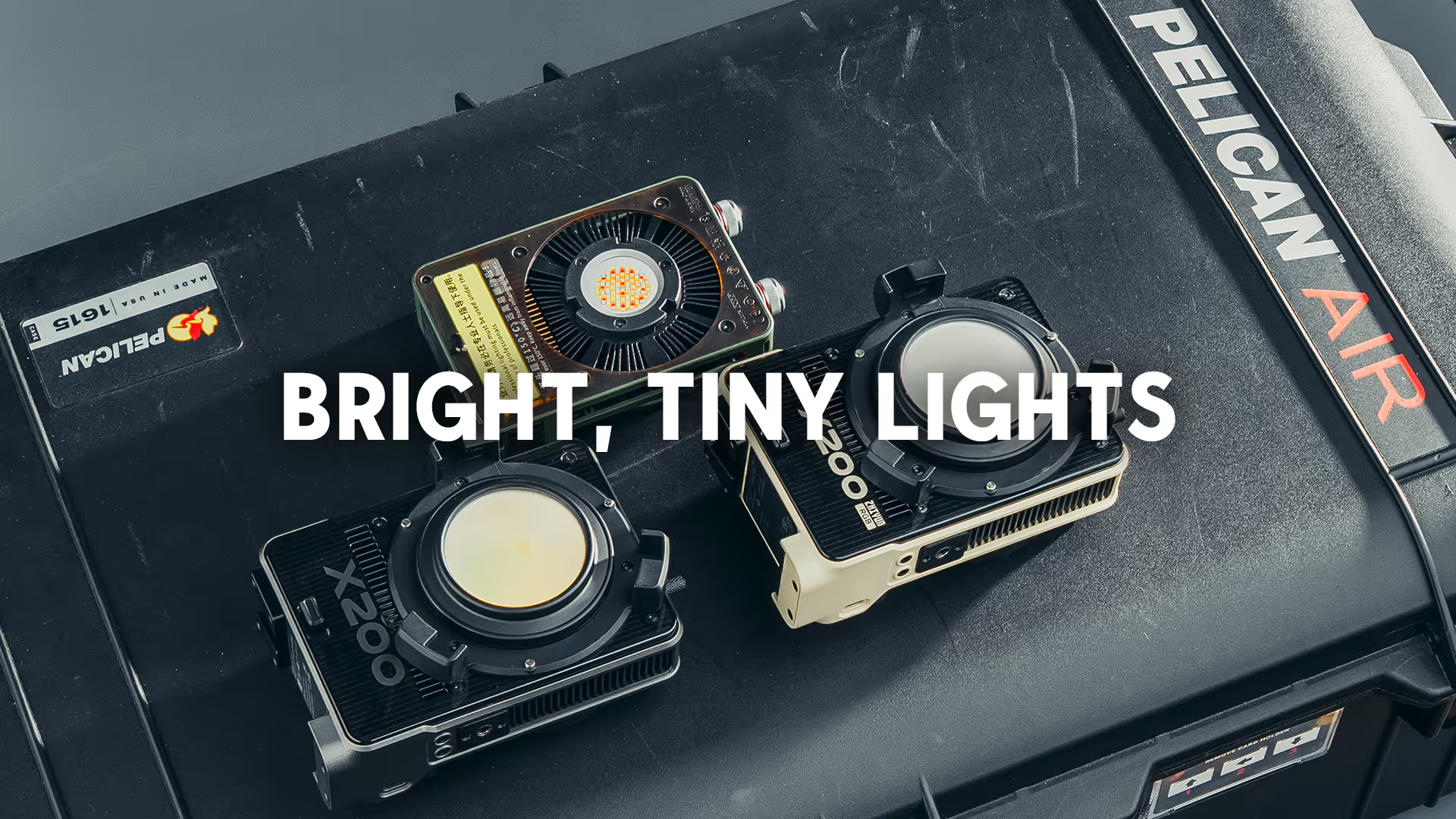
The core of this kit is built around Zhiyun X200 RGB, X200 and X100.
I'm using the X200 as the key. What drew me to it immediately was the V-mount battery attachment on the side. A 200-watt light you can slap a battery on and go, no cables, no hunting for outlets. On V-mount power, you can't push it to 100%, but plugged into the wall via the external AC adapter, or dual v-mount holder that comes in the combo, you get the full 200 watts. I've found 200 watts to be the sweet spot. 100 isn't always enough. 300 means I'm rarely using it above 75%. If you need more than 200, you're probably comeptnig with window light, so we'll need higher-wattage lights and modifiers that I will need more of a team to make work.
The X200 rgb has been my ambient fill. If a location feels too sourcy, I'll put this in a ceiling to raise the overall ambient level. I'm not using the RGB function to its full potential yet, but it's invaluable when I need to match an oddly-colored location beyond the standard 3200 to 10,000K range and need to adjust tint.
Both of these lights, plus their AC adapters, power cords, and stand adapters, fit into a single compartment in the 1615.
The Modifier That Sold Me
Before the X200's, the Zhiyun light that caught my attention was the X100, specifically because of its modifiers. The spotlight attachment is the smallest I've ever seen. I've been gravitating toward spotlight mounts more and more over the past couple of years, and while this one has limitations (don't expect to blast a wall and get usable ambient return), its close-focus and size make it awesome to work with. I've been using it for YouTube thumbnails, getting a focused, controlled hard light than I can achieve with larger units like the Godox or Aperture spotlight mounts.
I'm hoping Zhiyun releases barn doors and a spotlight attachment for the X200 line to match what they've done with the X100.
Supporting Gear Inside the Case
Beyond the main lights, the Pelican 1615 holds my supporting gear too:
Four 1-foot tube lights
These are my background interest lights. On a boring location with white walls, a single tube set to a warm color in the background adds just enough visual depth to keep the frame alive. I'm using a mix of Aputure tubes and godox tubes. If I could go back and buy one now, I'd go all Aputure, but I found the godox tubes on a great deal on B&H a while back.
Four V-mount batteries
I cut a custom slot for 4 v-mount batteries. Being able to put these on the x200's without any cables has been nice.
Two 5-in-1 reflectors
2, 5-in-1 reflectors that I velcroed to the lid. These sit with just enough space in the lid to not interfere with the compartments when the case is closed.
An iPad Mini
An iPad Mini, dedicated to controlling lights. I used to do everything from my phone, but switching between light control apps and notes, then waiting 30 seconds for the app to reconnect every time, was eating into my setup time. Dedicating an iPad to lighting was a small mental hurdle and a big improvement. If I had a gaffer, they'd have their own iPad for this.
The miscellaneous section
Safety chains, bongo ties, a-clamps, baby pins, a CamVate V-mount to light stand adapter, 2 super clamps, two-prong to three-prong adapters (my house is 105 years old, so sometimes you need an adapter), a small adjustable crescent wrench, screw driver, gaff tape, extra USB-C cables, a USB power brick, and an AirTag.
Extension cord
If I could do it over, I'd carry two 10-footers instead of one long one. More flexibility to either combine them or split the difference.
Three interlocking light stands
These are the reason the case is a Pelican 1615, is that i can include these interlocking light stands in the case. Great for travelling, since if I have multiple other pelicans for camera and audio, having the stands in the lighting case is one less thing to lug around.
What Doesn't Fit
The Zhiyun 30cm softbox is just slightly too large for the 1615. And my Aperture MT grid lives outside the case as well. These are the first things I grab when the job calls for them, but they don't live inside the daily kit.
The Real Point: Managing the Threshold
This Pelican isn't really about gear. It's about knowing where my threshold is.
I own 600-watt lights. I have 8x8 frames of Magic Cloth. I've built book lights on set. But if a client's expectation is that we're moving quickly with one person, maybe one assistant, I know from experience that breaking out 600-watt fixtures I'll bespread too thin. The lighting suffers, or the audio suffers, or the framing suffers. If that happens, I don't want the client to think that I'm bad at my job because something is lacking, or I'm taking a long time to set up and tear down lighting.
This has been how I've been using the Pelican 1615 with the X200's, X100 and a few tubes or a b7c. I've used it on three separate projects and for a few youtube videos and have loved having one case to work with. And I've gotten good feedback from clients who want to move quickly, since I can set up and tear down once case pretty quickly.